Your Culture Is Not Your Values Poster
Stated values on the wall don't reflect actual culture. Learn how to measure values-in-use through surveys, artifacts, and interviews that reveal reality.

By Ana Isabel Caguicla
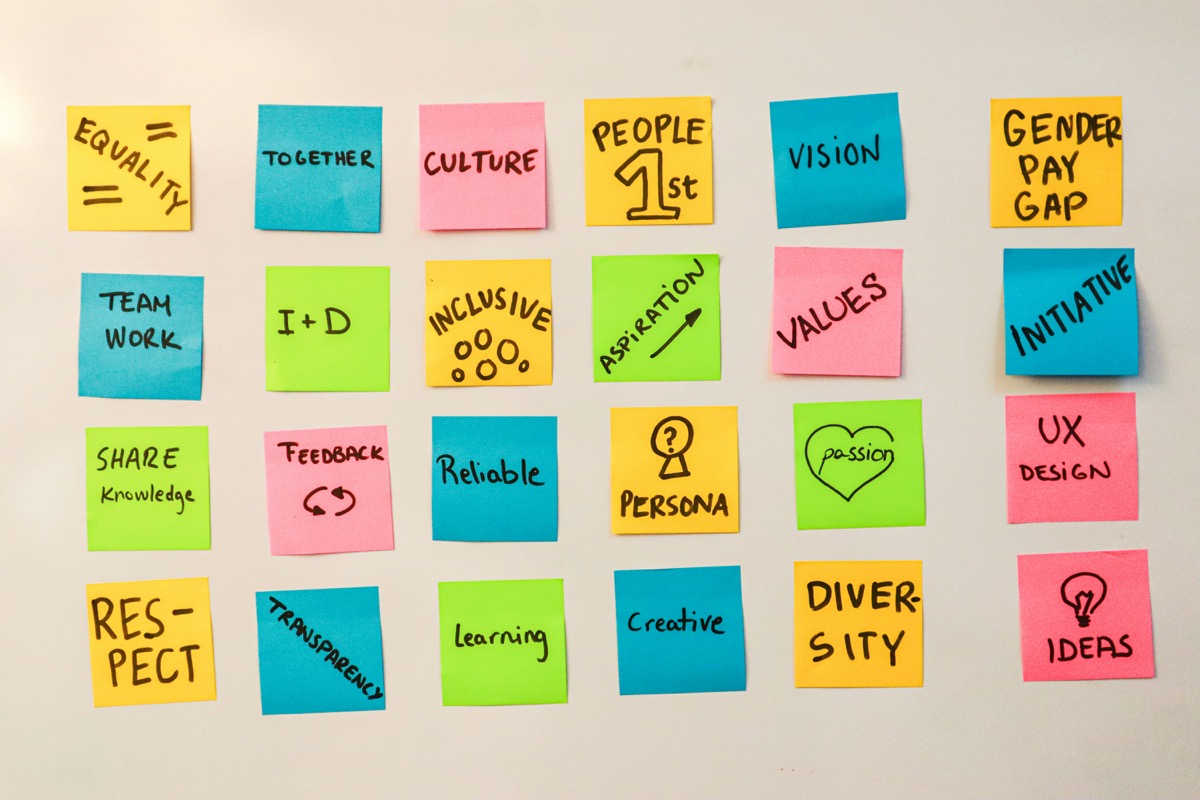
Walk into almost any company, and you’ll find them somewhere: on the lobby wall, on the website, in the employee handbook. Core values, carefully chosen, often beautifully designed. Integrity. Innovation. Collaboration. Excellence. They represent what leadership believes the company stands for, and in most cases, leadership genuinely means it. The problem is that stated values and actual culture are often two completely different things, and the gap between them is where execution drag quietly lives.
The Difference Between Stated Values and What Actually Drives Behavior
To understand what we mean by culture, it helps to distinguish between two things that are easy to conflate. Stated values are what leadership says matter: the principles on the poster, the language in the all-hands meeting, and the commitments made in hiring conversations. Values-in-use are what actually drive behavior day to day: the unwritten rules everyone follows, the things that really get rewarded, the decisions that actually get made when no one is watching and time is short.
When those two things align, culture is a genuine asset. When they diverge, you get an organization that says it values innovation but has approval processes that take weeks for even small experiments. That says it values empowerment, but where the safest strategy is waiting for permission before acting. That says it values transparency, but where bad news doesn’t travel upward until it’s unavoidable.
The divergence isn’t usually intentional. It emerges gradually as systems, incentives, and habits develop in ways that contradict the values leadership genuinely holds.
This is the fundamental problem with culture efforts that only ask people to rate how well the company lives its stated values. People rate innovation highly because they want to believe it’s true, or because they think that’s the right answer, or because the drift from aspiration has been so gradual they haven’t noticed it. You end up measuring what people wish were true rather than what’s actually happening.
Measuring What’s Real: The Triangulation Approach
Getting an accurate read on actual culture requires triangulating three distinct sources of information rather than relying on any one of them alone.
Surveys provide scale, letting you see patterns across many people and identify where experiences diverge. The questions that reveal actual culture are about behaviors and experiences, not values. Not “do we value collaboration,” but “how often do you need information from another team and struggle to get it?” The answers describe reality.
Artifacts reveal what your systems actually reward and punish: who gets promoted and what those people have in common, what behaviors earn recognition, how many approvals a new initiative requires, and how meetings run. These systems produce culture regardless of what anyone says.
Interviews and focus groups surface the nuance and causation that surveys can’t capture. The most revealing questions ask for stories rather than ratings. Ask someone to describe a time they saw a colleague get recognized here, and what that person actually did. Ask about a recent decision that took longer than it should have, and what created the delay. Ask what the fastest way to get in trouble is. The patterns across those stories reveal the unwritten rules that everyone follows without anyone having explicitly agreed to them.
The Culture Constraints Worth Looking For
This process is designed to identify what we call culture constraints — the norms and patterns that create friction and slow execution in ways that aren’t always visible until you look for them. Consensus culture produces decisions that take far longer than they should because too many people have informal veto power. Hero culture means certain work only gets done properly if specific people do it, creating bottlenecks and burnout concentrated in those individuals. A conflict-avoidant culture means problems don’t surface until they’re expensive because raising issues feels risky. An approval-seeking culture means people wait for permission even when they have the authority to act, creating unnecessary escalation volume.
These constraints rarely develop because someone made a bad decision. They develop because something that once made sense — more oversight when the team was less experienced, more consensus when alignment was harder to achieve — persisted and calcified into norms that no longer serve the business.
Why Culture Assessment Matters Beyond Organizational Health
Culture constraints show up directly in operational metrics. Decision latency — how long it takes from when a decision needs to be made to when it actually gets made — is often a direct product of approval-seeking or consensus culture. Escalation volume hitting the leadership team is frequently driven by conflict avoidance that prevents resolution at the level where problems originate. Quality inconsistency often traces back to hero culture, where results depend on specific individuals rather than systemic capability.
When culture assessment connects these patterns to operational metrics — days to decision, escalations per week, variance in output quality across teams — it stops being an abstract conversation about values and becomes a specific business case for targeted interventions. That’s when culture work produces real change rather than well-intentioned workshops and a refreshed values poster.
If execution feels slower than it should be, if good initiatives aren’t sticking, or if your systems seem to be working against what you’re trying to build, culture constraints might be the invisible barrier.
Ana Isabel Caguicla
Head of Research & Program Development
Isah is an educator and researcher with 20+ years experience in curriculum design, academic leadership, and program development.